
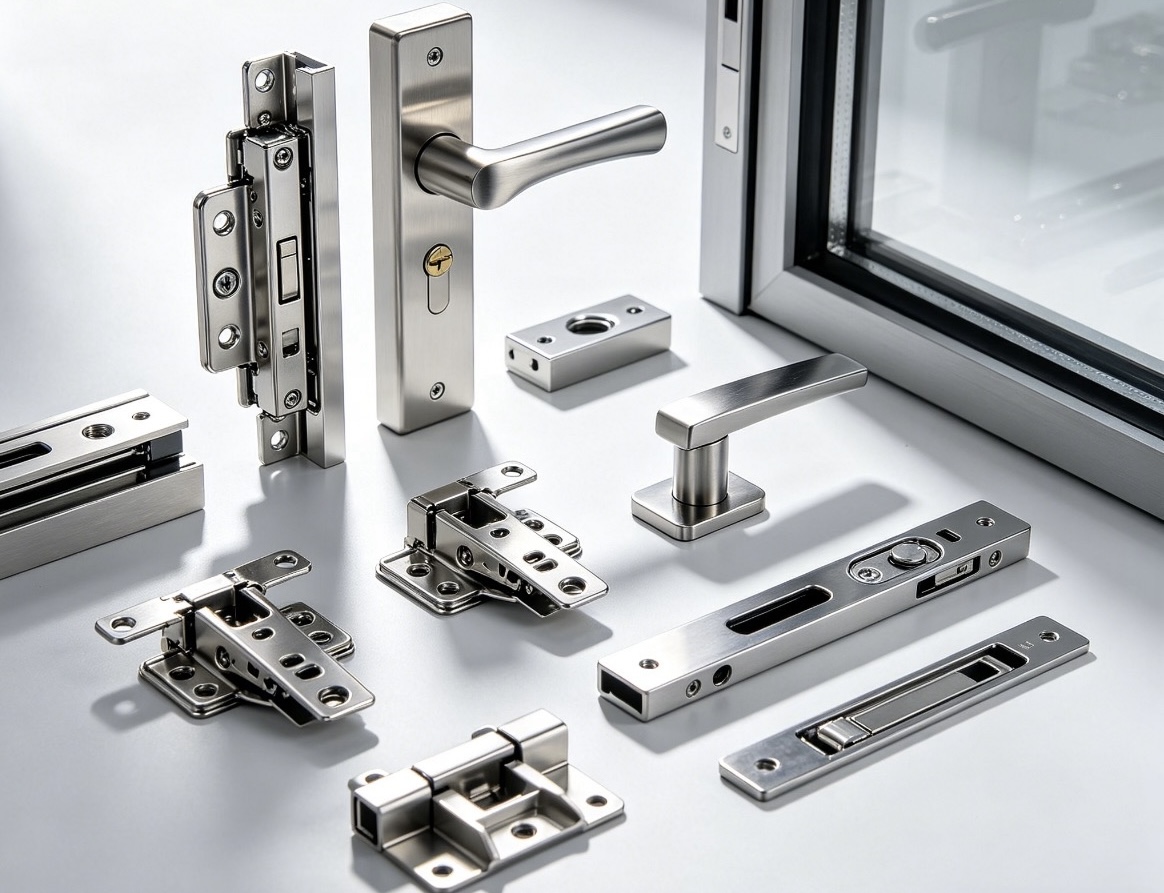
Have you ever been startled awake by a creaking window sash in your sleep? Or felt too afraid to approach a window swaying dangerously in strong winds? Or even heard of aging windows with broken hardware plunging and injuring pedestrians? These alarming scenarios remind us that while door and window hardware may be small, it serves as the invisible guardian of home safety.
Don’t underestimate these compact hardware fittings — their role is far from insignificant. They directly determine the performance, safety, durability, and security of your doors and windows, and even influence their aesthetics. Today, we take you on an in-depth look at the importance of door and window hardware, so you can make worry-free choices! Hinges used in the Singapore market undergo 100,000 open-and-close cycle tests — four times more stringent than the Chinese national standard. These seemingly small components bear the critical responsibility of connecting the various structural elements of doors and windows, playing a pivotal role in their overall performance.
Part Ⅰ : Why Door and Window Hardware Fittings Matter?
• Sealing Performance
Multi-point locking systems help doors and windows achieve superior sealing. By engaging multiple lock points that interlock tightly with the frame, the sash applies even pressure on the weatherstripping, enhancing the seal at the contact points. This ensures optimal air-tightness and water-tightness, effectively preventing small gaps that could lead to drafts or water leakage — issues that would otherwise compromise your living comfort.
• Safety
The quality of hardware fittings has a direct impact on the safety of doors and windows. Hinges and anti-pry lock points are the key to preventing forced entry, giving doors and windows robust pry resistance. Meanwhile, during extreme weather conditions, they ensure sash stability and prevent deformation, detachment, and accidental opening.
• Service Life
When the hardware fittings that support the normal operation of doors and windows suffer damage, breakage, rust, or aging due to improper use or prolonged service, the actual functionality of the doors and windows is significantly diminished — they may even become entirely inoperable.
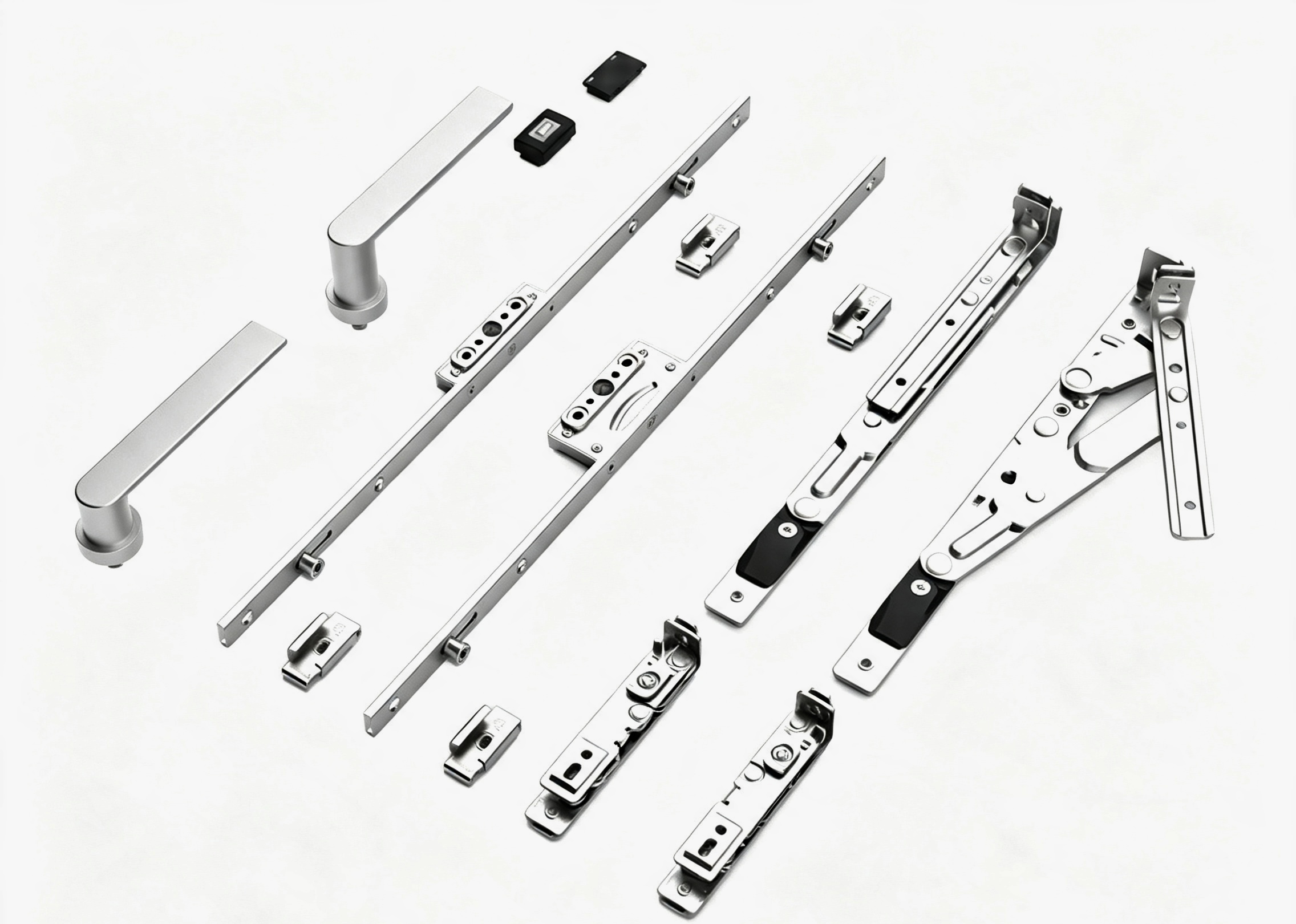 Part Ⅱ : How Should You Choose the Right Door and Window Hardware?
• Material
Hardware fittings are the moving joints of doors and windows, constantly subjected to friction and exposure to various environmental elements. Material selection is therefore paramount. Premium door and window hardware is predominantly made of 304 or 316 stainless steel, offering excellent corrosion resistance and meeting salt-spray testing requirements.
• Compatibility
Different types of doors and windows require different hardware. Before purchasing, clearly identify your door and window type, then evaluate the hardware accordingly. For example, casement windows call for particular attention to hinge load-bearing capacity, handle ergonomics, anti-fall safety cables, and restrictor stays; sliding windows, on the other hand, place greater emphasis on the smoothness of rollers, the sealing integrity of locks, and buffering dampers.
• Brand
When selecting hardware fittings, opt for well-known brands for greater peace of mind. High-quality hardware brands subject all their fittings to rigorous production standards and stringent quality control. Handles open and close smoothly, hinges offer strong load-bearing capacity and stability, and anti-fall cables are tough and durable — all providing a solid guarantee of home safety