
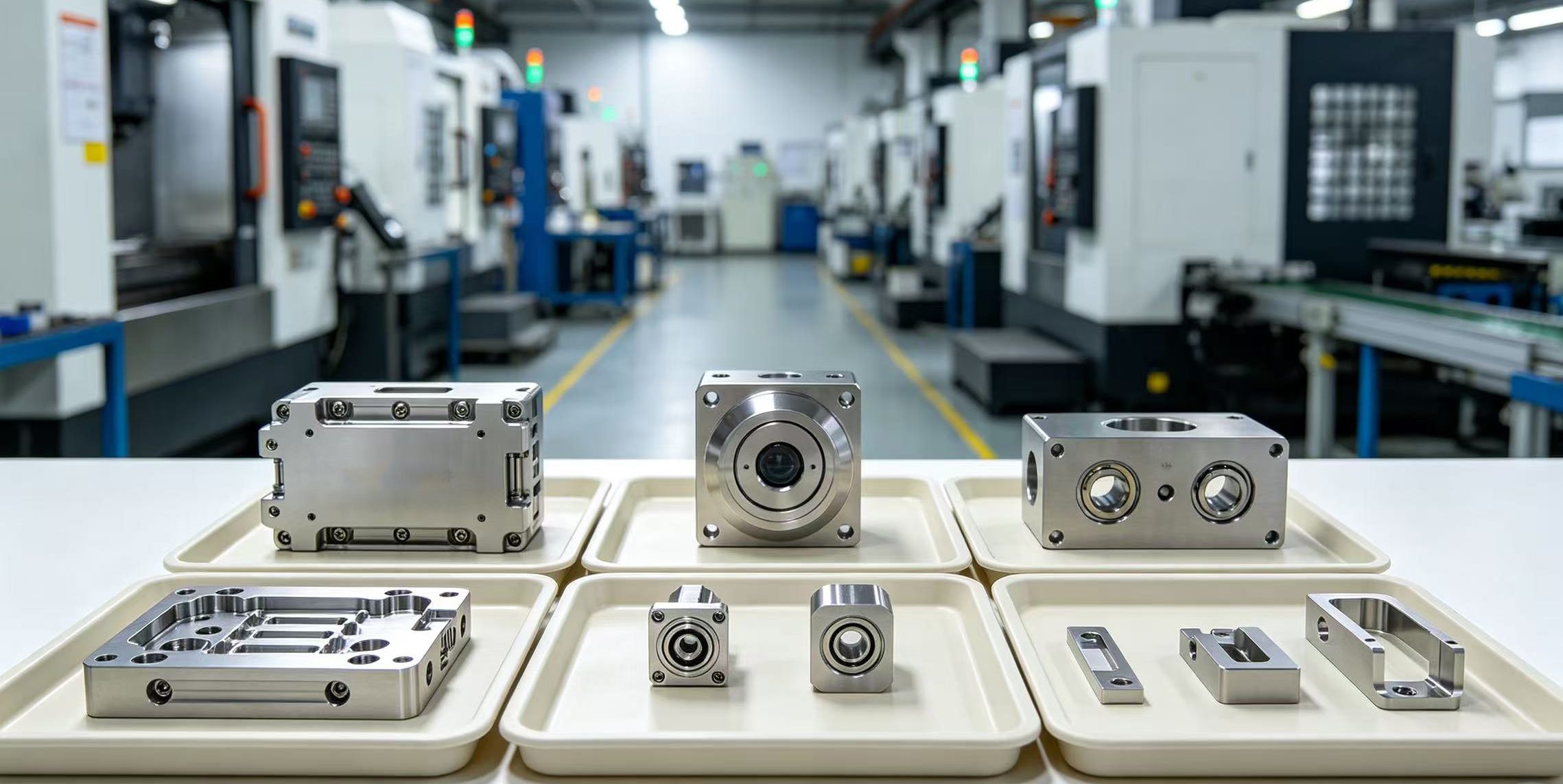
 As industrial products impose increasingly stringent requirements on part precision and complex structures, CNC precision machining has become the mainstream solution for custom-made component manufacturing. Unlike stamping, which shapes workpieces by mold compression, CNC machining cuts raw materials via digital programs.
CNC stands for Computer Numerical Control. CNC precision machining is commonly known as numerical control finish machining. Simply put, part drawings are converted into digital codes recognizable by machine tools. Following pre-set paths, CNC machine tools perform cutting, drilling, milling and turning on metal blanks to remove excess materials and produce finished parts complying with dimensional tolerance requirements.
I.Complete Process Flow of CNC Machining
Drawing Programming: Customers provide 2D/3D drawings. Engineers build 3D models, generate G-codes for machine tools, and set parameters including cutting tools, rotational speed and feed rate.
·Workpiece Clamping and Trial Cutting: Metal raw materials are secured onto the machine tool worktable. The first-article trial machining is carried out for preliminary dimensional verification.
·Batch Production: After the first-article inspection passes, the machine tool automatically executes programs to complete part fabrication.
Deburring and Post-processing: Burrs and flash generated in machining are removed. Surface treatments such as sandblasting, anodizing, electroplating and polishing are implemented as required to enhance corrosion resistance and surface texture.
·Precision Inspection: Calipers, micrometers and coordinate measuring machines (CMM) are adopted to test dimensions and geometric tolerances. Qualified parts will be packed for delivery.
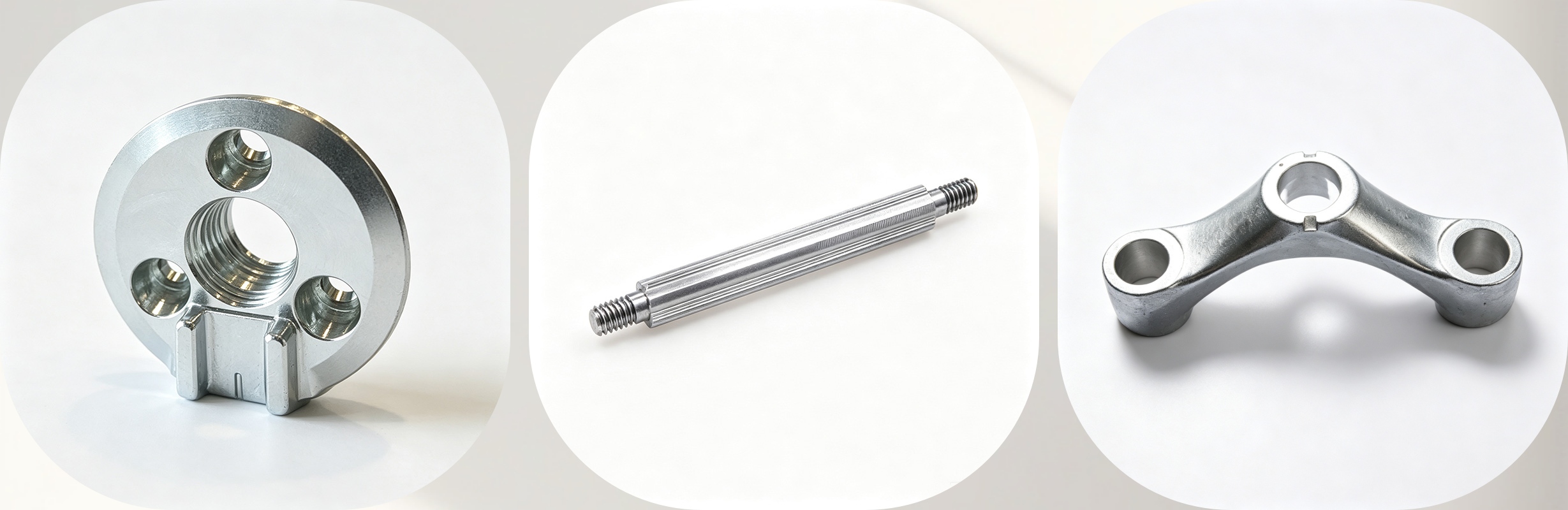
II. Core Characteristics of CNC Machining
· High Machining Accuracy
CNC machine tools can sustain ultra-tight tolerances. Some equipment achieves an accuracy of 0.01 mm, meeting demands for components requiring tight assembly and high sealing performance, which cannot be easily fulfilled by many conventional machining processes.
· Compatibility with Complex Special-shaped Structures
It supports the fabrication of parts with curved surfaces, grooves, multi-hole layouts and irregular profiles, suitable for complex-shaped workpieces that cannot be one-shot formed by stamping molds.
· High Flexibility for Small-batch Production
Stamping requires mold development and suits mass-produced standardized parts. By contrast, CNC machining eliminates mold fabrication costs and supports production directly from supplied drawings. It fits prototype sampling and small-batch custom orders, perfectly matching new-product R&D phases.
· Wide Material Compatibility
It processes various metallic materials including aluminum alloy, stainless steel, carbon steel and brass. Diversified surface treatments such as anodizing, sandblasting and electroplating are available according to customers’ application scenarios.
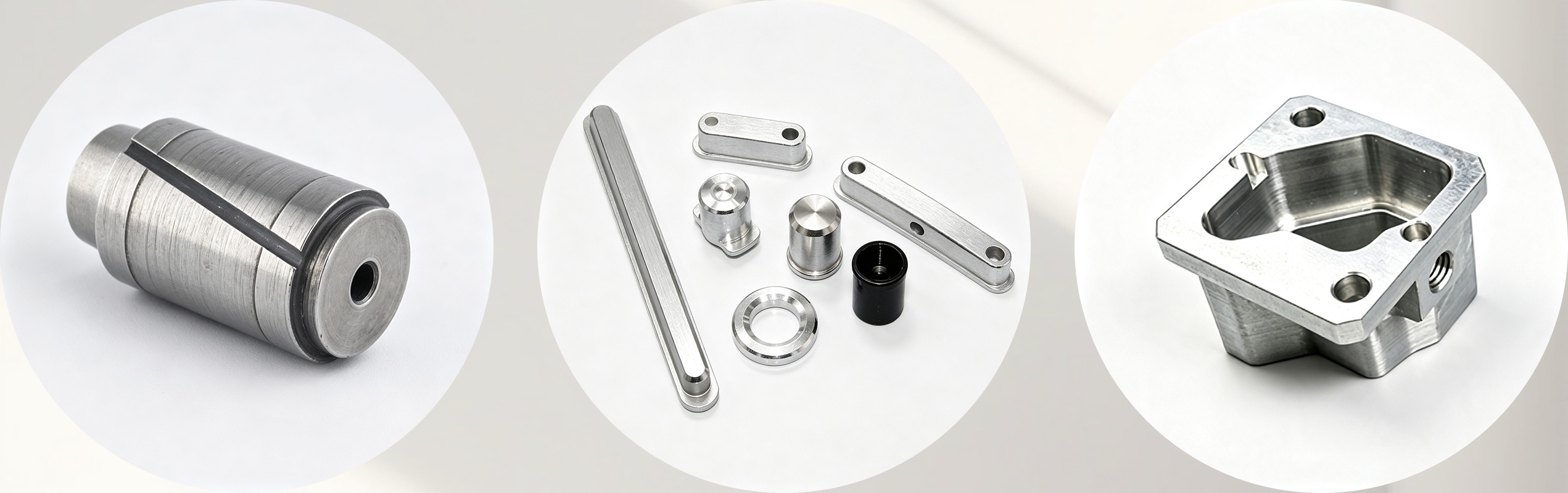
III. Application Sectors of CNC Machining
·New-energy Industry: Energy-storage equipment, electric-control housings and connection assemblies
· Automotive Industry: Custom-made precision structural auto parts
· Automation Equipment: Tooling fixtures and equipment frame accessories
· Furniture Hardware: Custom special connectors and special-shaped decorative hardware
IV. Comparison Between CNC Machining and Metal Stamping
| CNC Finish Machining | Metal Stamping | |
| Forming Principle |
Subtractive manufacturing by cutting off excess materials |
Relatively high unit cost; higher unit price for smaller order quantities |
| Mold-related Costs | No mold-development fees; only program commissioning fees |
Custom-mold fabrication required with high upfront investment |
| Applicable Batch Sizes | Prototyping and small-batch production | Mass production (thousands or tens of thousands of pieces minimum) |
| Part Profiles | Thick-material parts with complex 3D curved surfaces and multi-feature structures | Thin-sheet metal parts dominated by planar surfaces and simple bent profiles |
| Unit-price Features | Relatively high unit cost; higher unit price for smaller order quantities |
Low unit cost in mass production; more cost-effective with larger output |