
With the advancement of modern furniture and growing demand for refined living, hardware fittings have become a critical metric for evaluating overall furniture quality. Whether you commission on site carpentry work, order custom furniture, or purchase finished furniture products, furniture hardware deserves due attention. Read on to learn about the classification, selection and maintenance practices for furniture hardware fittings.
I. Classification of Furniture Hardware
Furniture hardware refers to metal components applied in furniture manufacturing and usage. There is a wide variety of furniture hardware, which can be grouped under different criteria.
· Classification by function
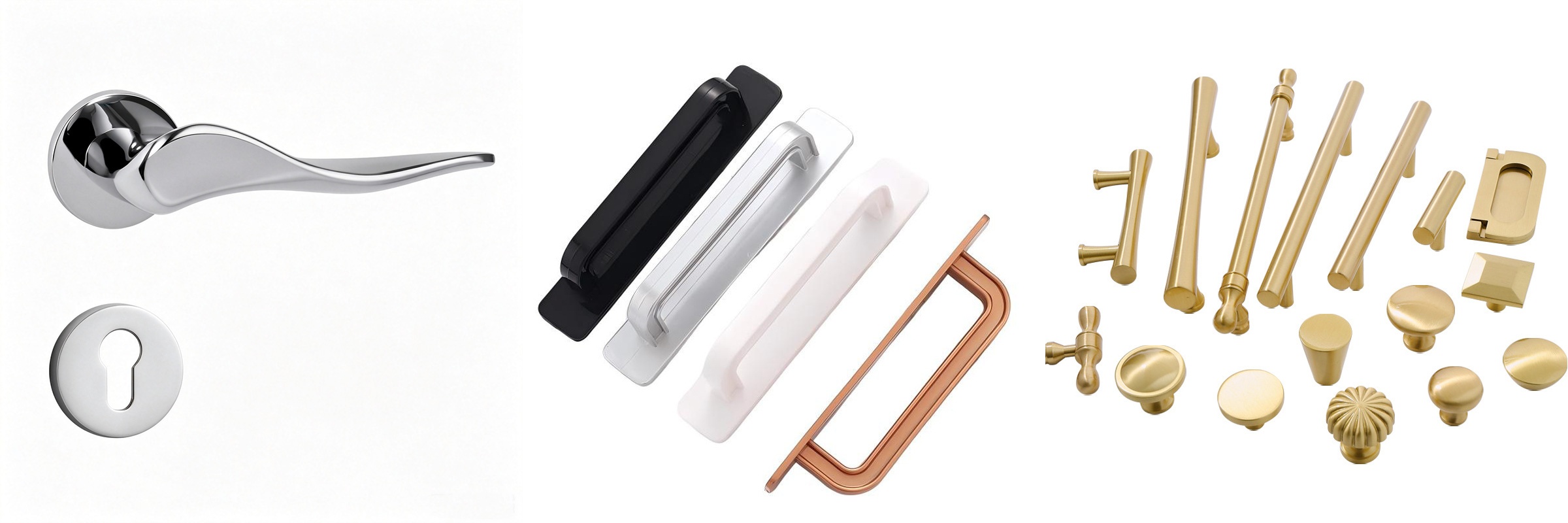
Furniture hardware falls into three categories: functional furniture hardware, structural furniture hardware and decorative furniture hardware. Functional furniture hardware includes connecting components such as three in one connectors and screws, as well as motion enabling parts including slide rails, hinges and guide wheels. Structural furniture hardware covers metal frames for glass coffee tables and metal legs for round negotiation tables. Decorative furniture hardware comprises aluminum edge trims, hardware hangers and hardware handles.
· Classification by application
By application scenarios, furniture hardware can be divided into solid wood furniture hardware, panel furniture hardware, cabinet hardware fittings, wardrobe hardware fittings and more.
· Classification by material
Material based classification is the most common approach for furniture hardware. Major materials include pure metals, alloys, plastics and ceramics. Hardware items of different materials exhibit distinct performance and quality stemming from material specific properties.
II. Common Materials for Furniture Hardware Fittings
· Copper One of the most widely adopted materials, featuring favorable mechanical properties, satisfactory corrosion resistance and work ability.
· Stainless steel Long lasting with an increasingly glossy finish over time. It boasts high strength, superior corrosion resistance and colorfast performance.
· Zinc alloy Relatively weak in strength and rust resistance, but it has the advantage of being easy to cast into parts with intricate patterns.
· Aluminum or aluminum alloy Ordinary aluminum alloys are soft and lightweight, with relatively low material strength, yet they are easy to process and form.
III. Selection of Common Furniture Hardware Fittings
Movable functional hardware fittings are vital components enabling opening, closing and sliding motions of furniture. This section focuses on two key movable hardware items: hinges and slide rails.
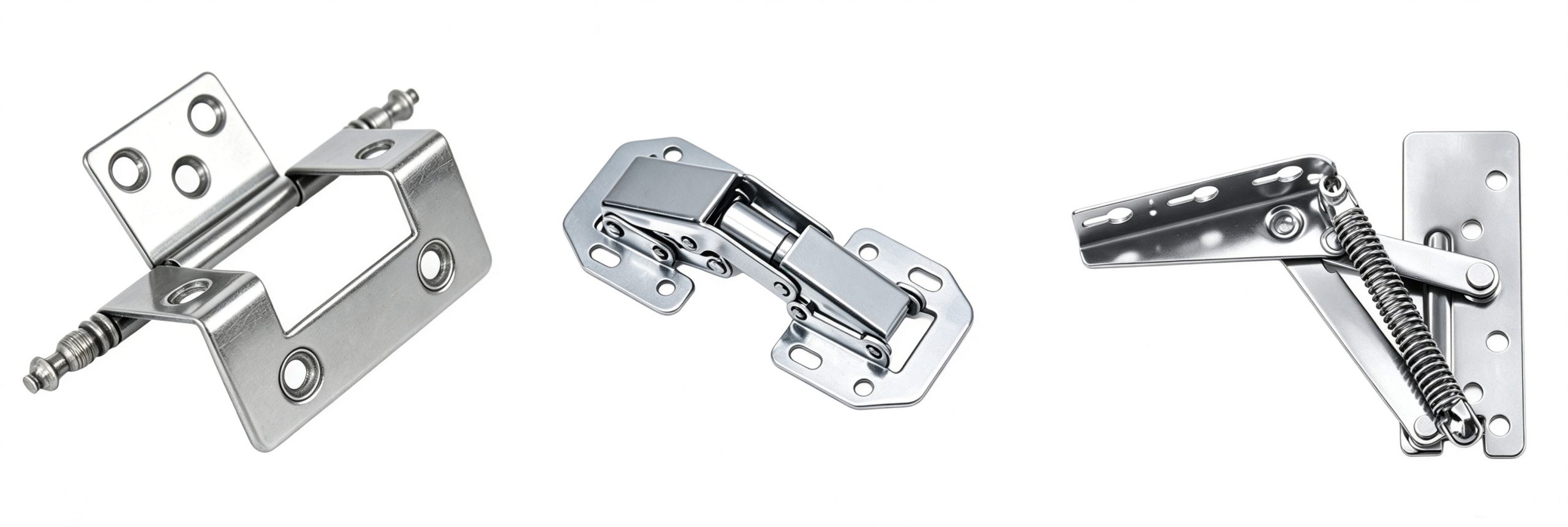
· Plain hinges Plain hinges are mainly made of brass or stainless steel. For brass hinges, a deeper yellow hue generally indicates higher copper content. Premium hinges reach approximately 3 mm in thickness, whereas inferior products tend to be thin. Choose hinges with good sealing performance. Test flexibility and stability by opening and closing the hinge repeatedly.
· Spring hinges Spring hinges come in full-overlay, half-overlay, and inset types, corresponding to three different ways of mounting a door to the cabinet body. Hinges made of stainless steel or steel plate have thinner leaves but excellent toughness and are not prone to breakage, whereas cast-iron hinges have thicker leaves but are brittle and easily cracked.
· Handles Mounted on furniture, handles ease daily operation, and well matched handles also deliver prominent decorative effects. First, inspect surface appearance: high quality sand finished handles show a relatively muted, solid visual tone. Second, test tactile feel: premium handles have smoothly finished edges free of burrs that cause scratches. Third, tap the handle tube with a hard object. Tubes with sufficient wall thickness produce a clear, crisp sound, while thin walled tubes yield a dull thud.
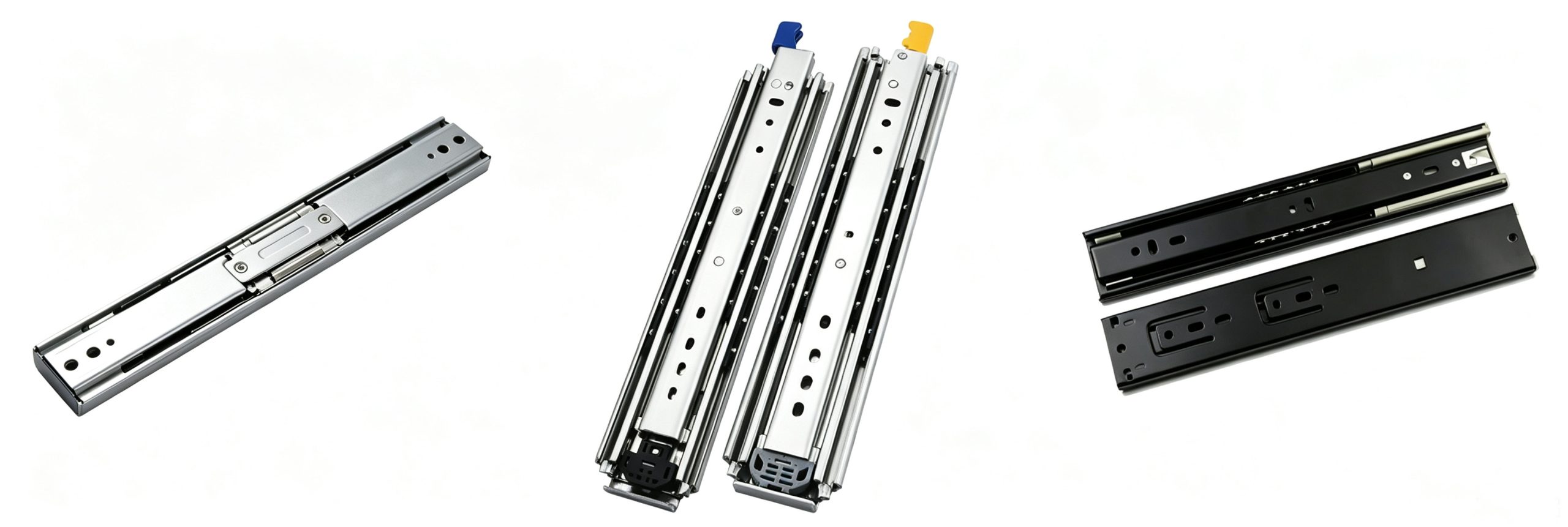
· Slide rails Slide rails are grooved or curved guide tracks for the movement of furniture doors, drawers and other movable parts, often fitted with ball bearings. When selecting slide rails, first inspect rail materials. Plastic pulleys, steel balls and wear resistant nylon represent three mainstream pulley materials; wear resistant nylon is the premium option for near silent sliding. Second, test pull out force by hand to check for excessive pulling resistance. Third, assess lateral wobble: slide rails mounted on drawers should have minimal shake.
IV. Cleaning and Maintenance of Furniture Hardware
· Maintenance of clean and dry surfaces
Keep hardware surfaces clean. Immediately wipe off any water stains incurred during use to maintain consistent cleanliness and dryness.
· Prohibition of hard object surface abrasion
Avoid scratching surfaces with sharp or rigid objects. Clean surfaces with damp cloths, or damp cloths dipped in neutral detergent, and wipe away residual liquid afterwards.
· Prevention of contact with acidic substances
Prevent exposure to hydrochloric acid, table salt, bittern and similar substances to avert hardware corrosion.
· Regular lubricant application
Apply lubricant periodically to components such as bearings to reduce friction and extend service life.