
In the automotive manufacturing sector, stamping constitutes the critical initial step of shaping flat steel sheets into vehicle body components. Starting from a coil of cold rolled steel sheet to sleek body character lines, the quality of the stamping process directly governs the dimensional accuracy, structural strength and aesthetic appearance of the vehicle body. It can be argued that stamping serves as the “foundation” of overall vehicle quality. Concealed within the framework of every automobile, it determines both the visual appeal that catches consumers’ first sight attention and the long term safety performance during service.
I. Stamping Accuracy: Determining Body Styling and Aerodynamic Drag
The level of stamping accuracy is directly reflected in the vehicle’s visual perception and driving performance. Superior stamping technology delivers uniform body gaps and crisp character lines, which reduces aerodynamic drag and improves vehicle-level NVH ( Noise, Vibration and Harshness ) performance.
· Die Accuracy
Die tolerances can reach up to 0.1 mm, ensuring sharp contours and precise dimensions for each component. For outer panels on premium vehicles, even stricter die-accuracy requirements are imposed to achieve sub-millimetre control of gaps and flush offsets.
·Positioning System
Optical positioning combined with mechanical clamping prevents sheet-metal displacement during stamping. This keeps gaps between large outer panels consistent and well-controlled, yielding neat, uniform body panel clearances after assembly.
·Surface-Quality Control
Polished mirror-finish dies and rigorous cleaning procedures eliminate surface defects such as scratches and indentations. Consequently, the painted body surface retains mirror-like gloss in subsequent coating processes.
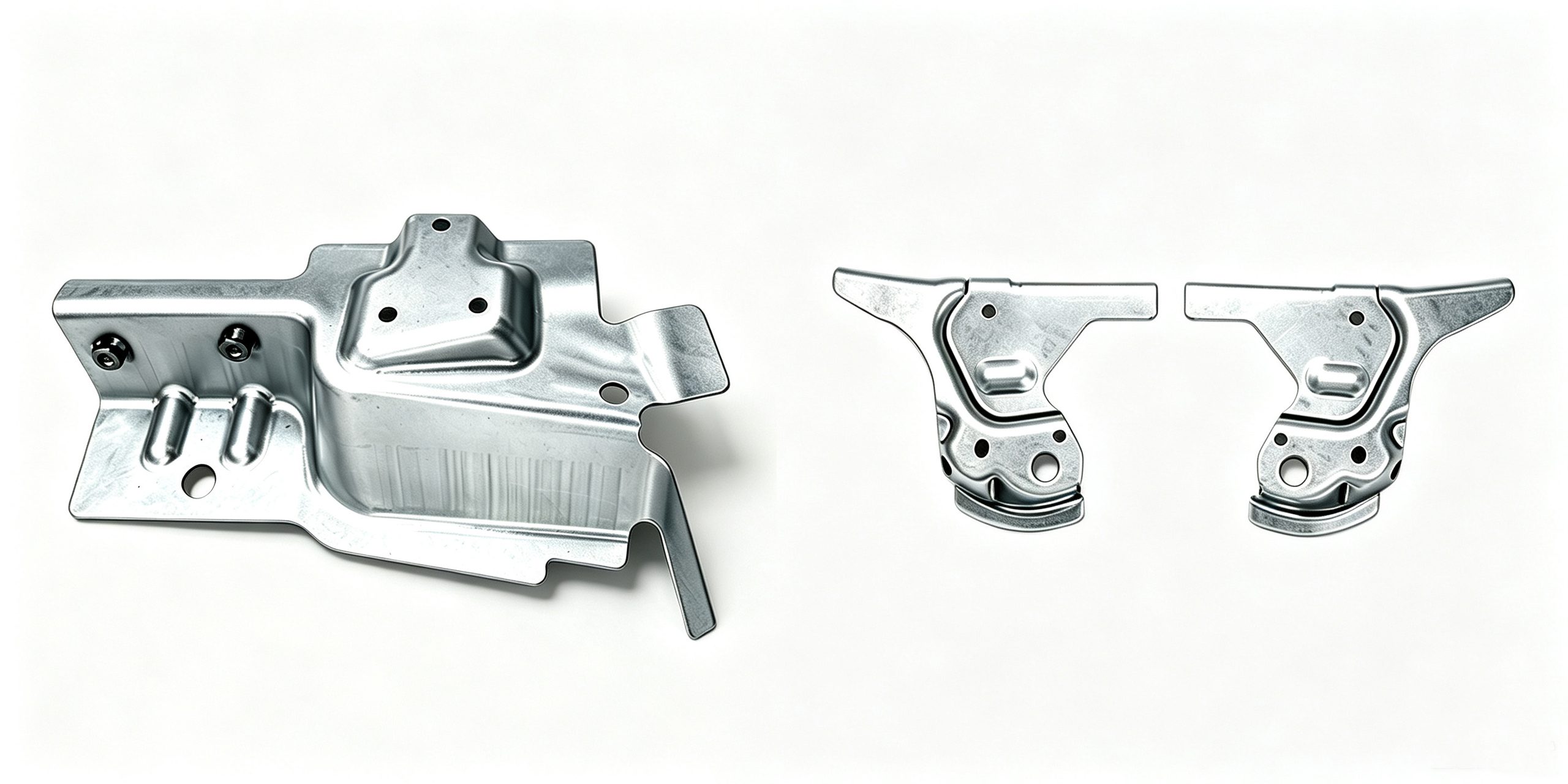
II. Material Formability : Influencing Body Strength and Crash Safety
Strength represents the bottom line requirement for automobiles. Stamping processes determine whether body structural components can achieve high robustness without compromising lightweighting, which bears a direct bearing on crash test ratings and occupant safety.
·Material Selection
High-strength steel and aluminium alloys are adopted to realise weight reduction while maintaining structural integrity. For instance, hot-formed steel applied on critical sections such as A-pillars and B-pillars helps preserve cabin integrity during frontal offset collisions.
· Forming-Limit Control
Precise simulation of material flow averts stamping defects including cracking and wrinkling, allowing material mechanical properties to reach designed performance targets.
· Springback Compensation
Springback magnitude is predicted according to material properties and compensated at the die-design phase. This stabilises part geometry, maintains consistent assembly gaps over service life and avoids perceived structural looseness.
III. Process Innovation : Core Driver for Body-Quality Improvement
Digitalisation and automation define modern stamping workshops and act as key enablers for quality upgrading.
· Servo-press Technology
Enables precise regulation of stamping velocity and press force, enhancing part-to-part consistency. Motion profiles can be flexibly adjusted for materials of varying grades and thicknesses to cut energy consumption and noise emission.
· Automated Material Handling
Robots rapidly transfer blanks to avoid surface damage caused by manual handling. High-throughput production and premium part quality are achieved simultaneously.
·In-line Inspection System
Real time vision based dimensional monitoring feeds back deviations to equipment for automatic parameter adjustment. Quality control evolves from post-process sampling inspection toward full-process traceability.
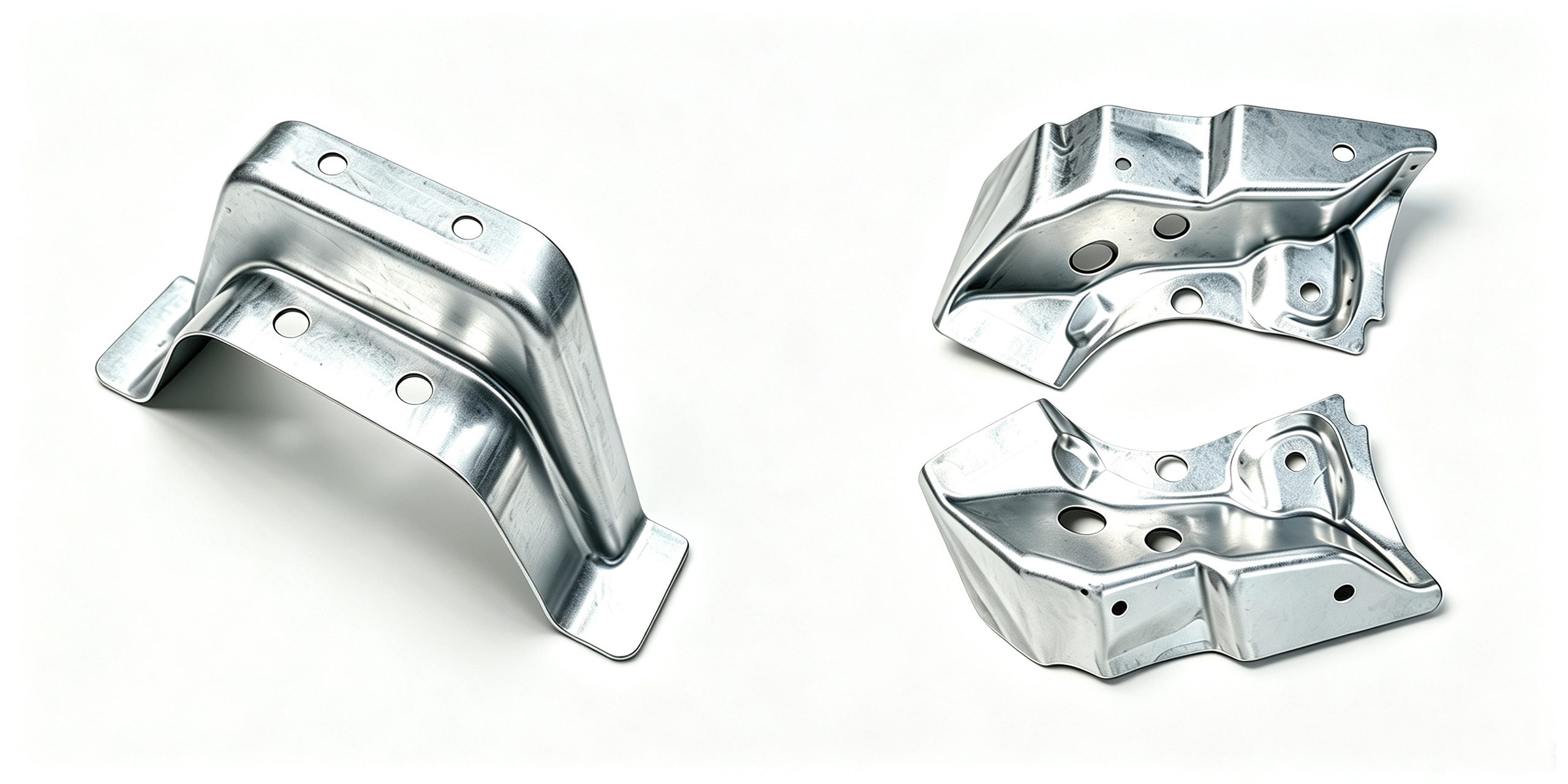
IV. Fine-tuning Details : Subtle Manifestations of Build Quality
Perceived premium quality originates from subtle details that consumers may not consciously notice yet can experience over years of usage.
· Character-line Forming
Precise stamping of character-lines not only elevates visual styling but also optimises aerodynamics. Sharp light-shadow contours lend a poised stance to the whole vehicle.
· Joint-face Accuracy
High-precision flanges and mating surfaces create favourable preconditions for subsequent welding and adhesive dispensing. This improves overall body torsional rigidity and mitigates long term squeak and rattle issues.
· Corrosion-resistant Design
The integrity of zinc-coated layers is preserved after stamping to sustain long term anti-corrosion performance. Well maintained body condition throughout vehicle service life also supports better residual-value retention.
Every link within stamping operations exerts direct influence on final body quality. From steel-grade selection and die engineering, through press-motion control to part inspection, rigorous stamping manufacturing lays a solid foundation for complete-vehicle performance. Such meticulous attention to detail transforms cold steel sheets into robust, aesthetically pleasing body contours and delivers refined craftsmanship for modern automobiles.
For this reason, when driving a favoured vehicle down the road, what we observe is more than just a brand logo — behind it operates a sophisticated precision-manufacturing system. And stamping is where all such elegant vehicle forms originate.