
Stamping is the leading process in automobile manufacturing. The stamping workshop undertakes the following tasks: the storage of raw coil and sheet materials; the uncoiling and shearing of coils; the shearing of sheets; the stamping production of large, medium and small stamping parts for various vehicle models; the storage of stamping parts; scrap disposal; as well as the routine maintenance and repair of equipment and dies.
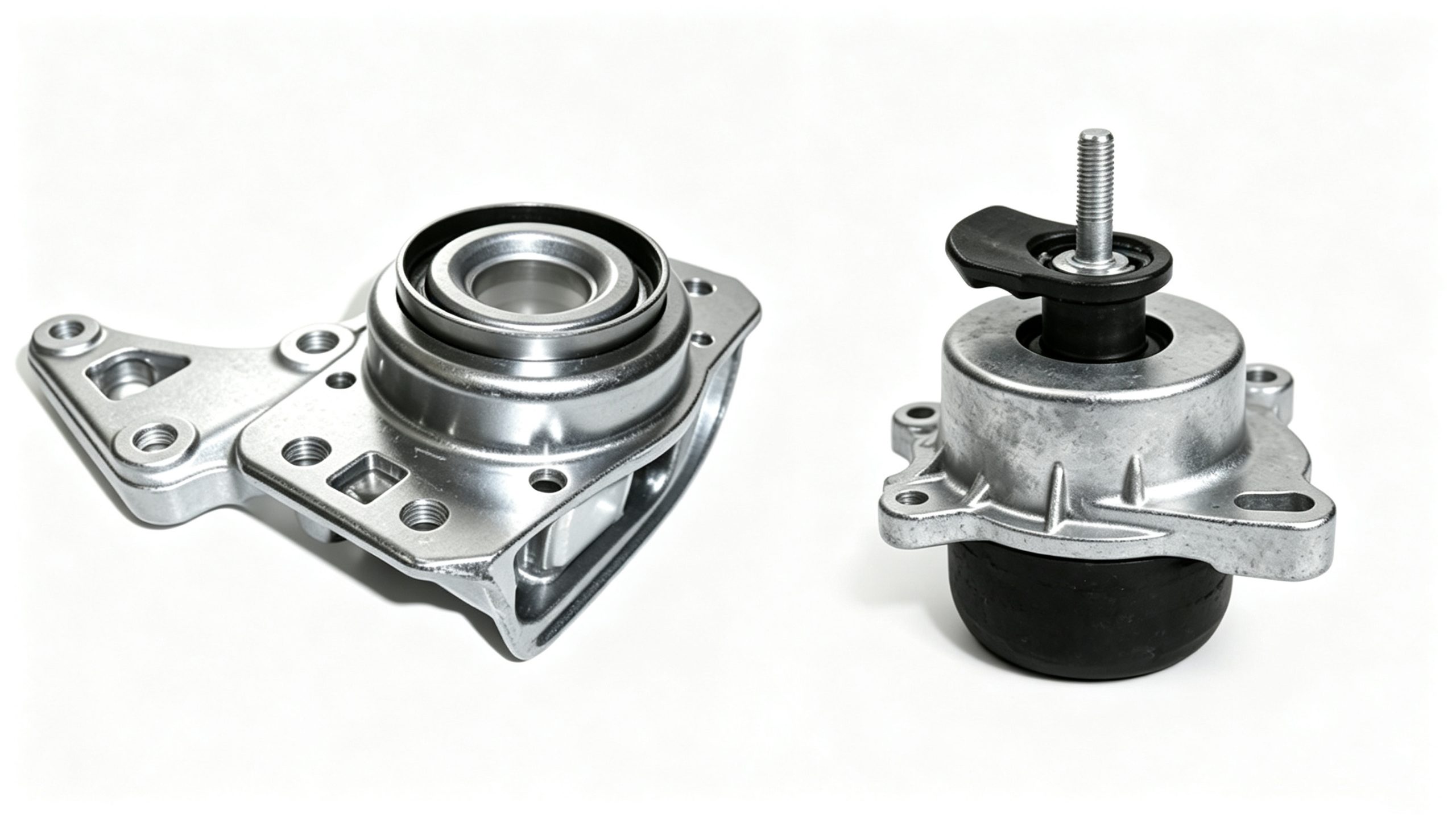
I. Process Flow of the Stamping Workshop
Receive and Store Raw Materials (Sheets and Coils) → Feed Them to the Uncoiling Line → Clean and Oil Large Parts, and Uncoil and Shear Small Parts → Feed Blanks to the Stamping Production Lines → Install and Debug Dies until the First Piece Passes Inspection → Launch Batch Production → Apply Rust Prevention to Qualified Parts → Store Finished parts.
II. Concept and Characteristics of Cold Stamping
1. Concept of cold stamping
Cold stamping is a pressure processing method carried out at room temperature, in which the dies mounted on a press machine apply pressure to the material so that it is separated or plastically deformed, thereby producing the required parts.
2. Characteristics of cold stamping
Cold stamping features stable product dimensions, high precision, light weight, good rigidity, good interchangeability, high efficiency and low consumption, simple operation, and easy realization of automation.
III. Classification of Basic Cold Stamping Operations
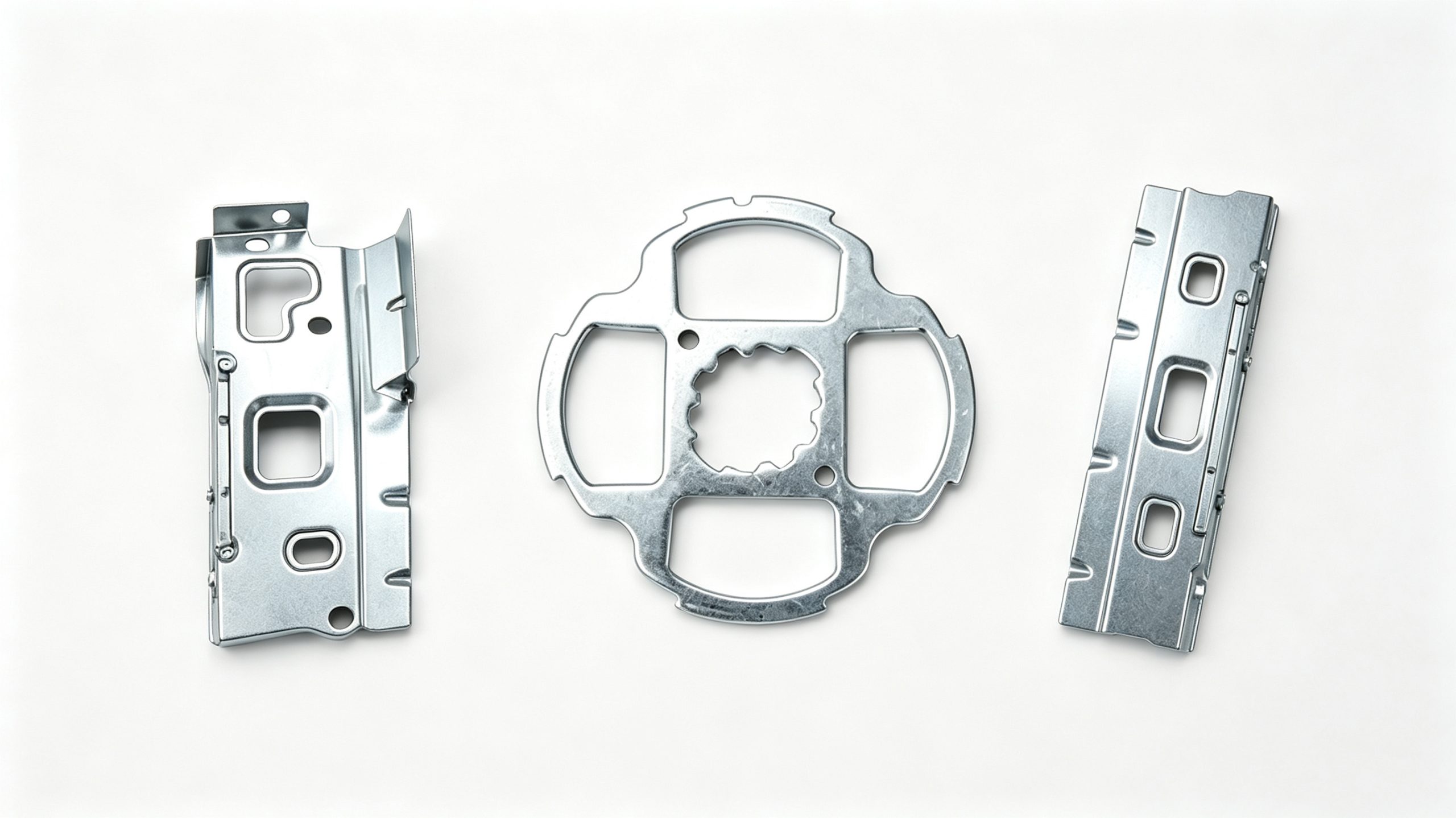
Cold stamping is generally divided into two major categories: forming operations and separation operations.
1. Forming operations
Forming operations are those in which the blank undergoes plastic deformation without fracturing, so as to obtain a stamped part with a certain shape and size. Forming operations include drawing, bending, flanging, restriking, etc.
· Drawing: a stamping operation in which a drawing die is used to form a flat blank (intermediate workpiece) into an open-ended hollow part.
· Bending: a stamping method in which sheet metal, profiles, tubes or bars are bent to a certain angle and curvature to form a certain shape.
· Flanging: a forming method in which the sheet metal on the flat or curved portion of the blank is turned up along a certain curvature to form a standing edge.
2. Separation operations
Separation operations are those in which the sheet is separated along a certain contour line, so as to obtain a stamped part with a certain shape, size and cut-edge quality. Separation operations include blanking, piercing, notching, trimming, etc.
· Blanking: when the material is separated along a closed curve and the portion inside the closed curve is taken as the stamped part, it is called blanking.
· Piercing: when the material is separated along a closed curve and the portion outside the closed curve is taken as the stamped part, it is called piercing.
IV. Requirements for Body Panels
1. Dimensions and shape shall conform to the checking fixture and the sample parts matched through welding assembly.
2. Good surface quality. The surfaces of exterior body panels shall be free of defects such as ripples, wrinkles, dents, scratches, scuffs and pressure marks; character lines shall be sharp and straight, and curved surfaces shall be smooth with uniform transitions.
3. Good rigidity. During the forming process of body panels, the material shall undergo sufficient plastic deformation to ensure that the part has adequate rigidity.
4. Good manufacturability. Body panels shall have good stamping and welding processability so as to reduce the production costs of stamping and welding. Stamping processability is mainly judged by whether each operation, especially the drawing operation, can be carried out smoothly and stably.
V. Composition of a General Die
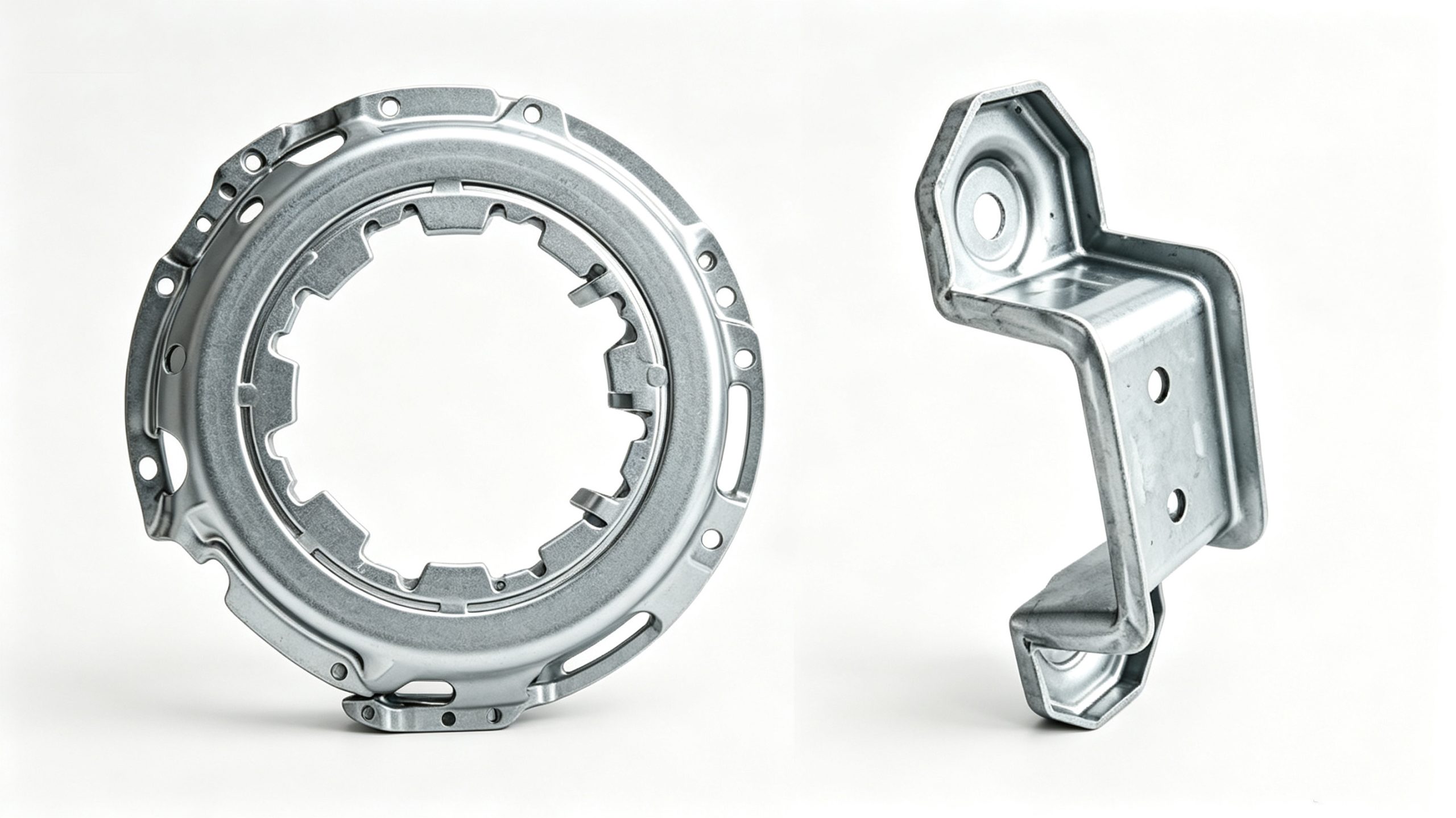
1. Working parts: including the punch, die and other parts.
2. Locating parts: mainly including the stop pin, locating pin, side trimmer and other parts.
3. Pressure, stripping and ejecting parts: mainly including the stripper plate, ejector, pneumatic ejecting device and other parts.
4. Guiding parts: including guide pillars, guide bushings, guide plates and other parts.
5. Supporting parts: including the upper and lower die plates and the punch/die retainer plates.
6. Fastening parts: including socket head cap screws, stripper bolts and other parts.
7. Buffering parts: including stripper springs, polyurethane rubber and nitrogen cylinders.